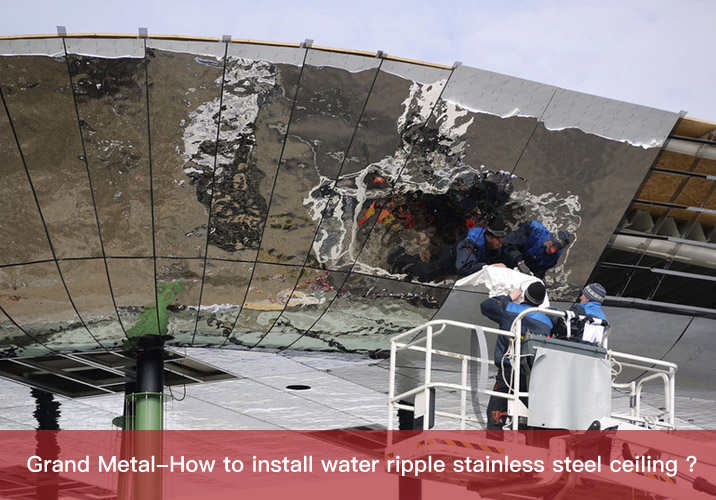
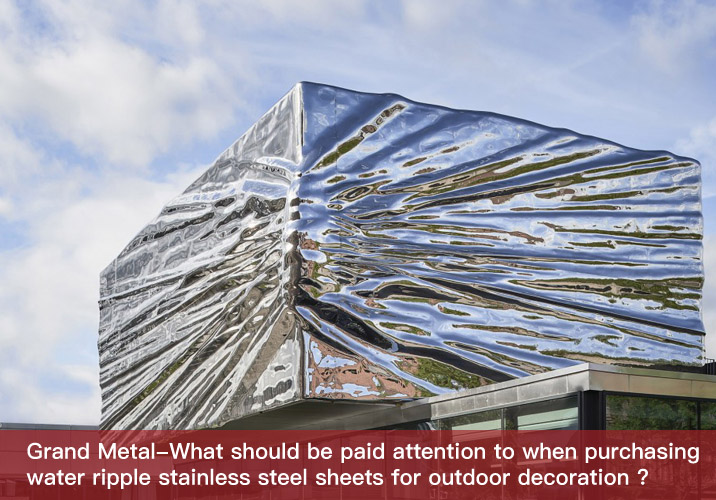
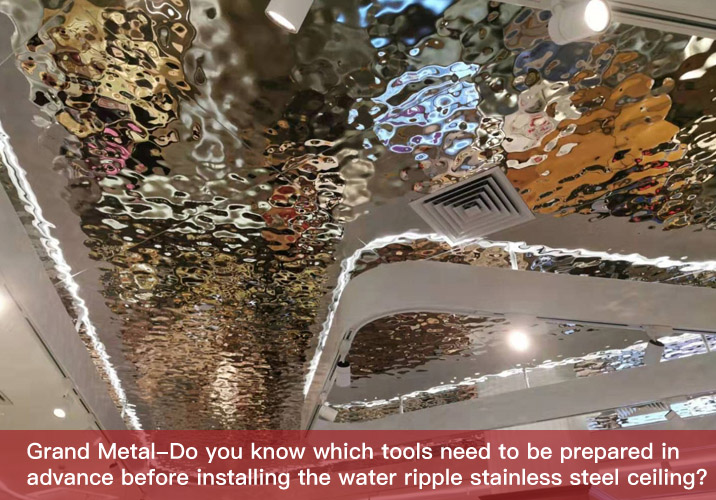
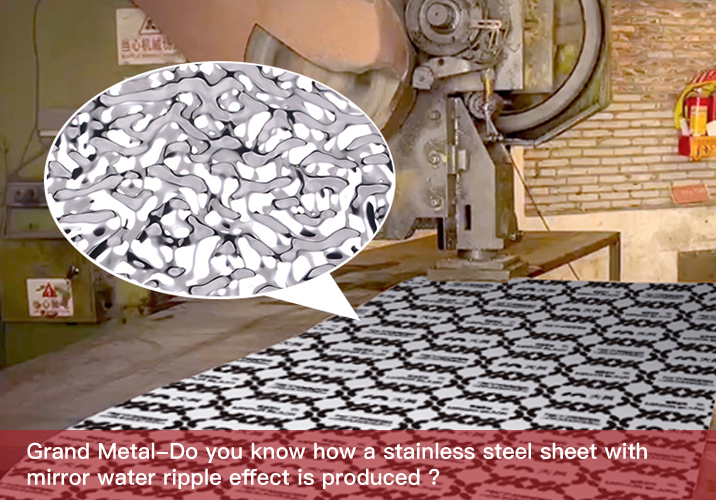
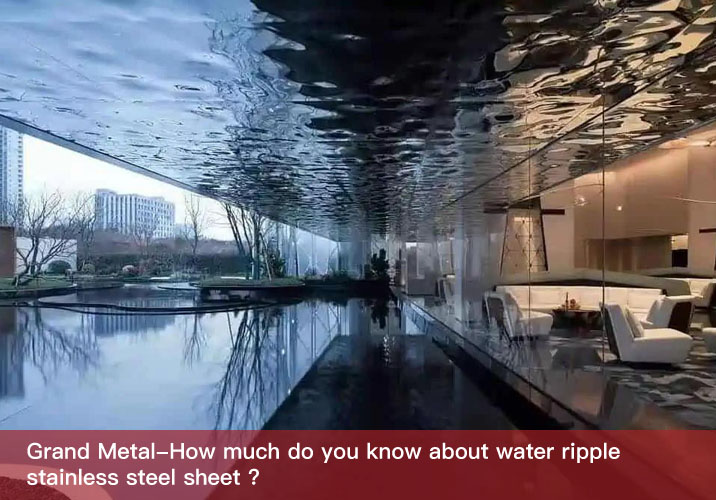
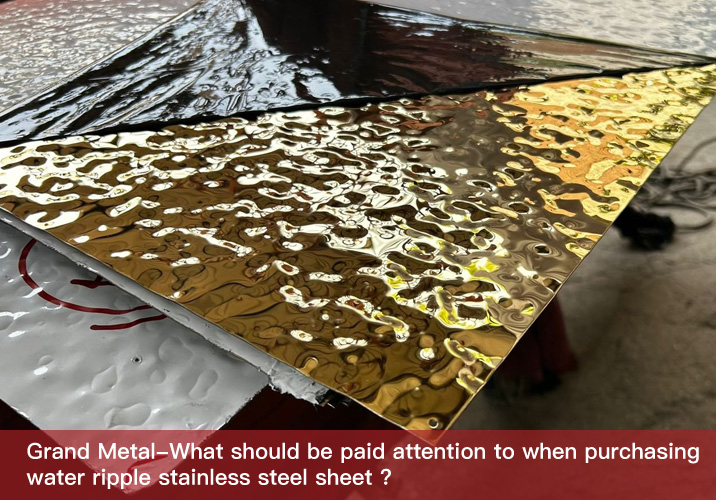
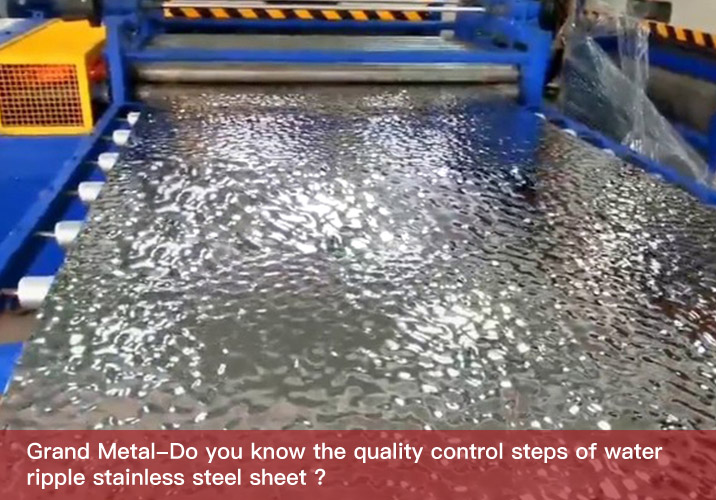
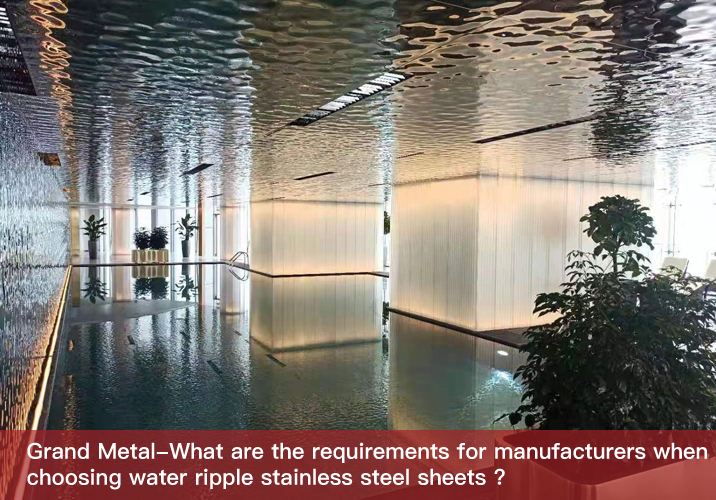
In our daily lives, we see magnificent metal walls everywhere in large buildings. So how are these uniquely shaped metal wall panels installed? Today, let's take a look at the installation guide for metal wall panels using stainless steel sheets as the wall decoration material!

Among various installation methods, structural adhesive fixing is an efficient and widely used solution that ensures a clean surface finish without drilling damage. Proper installation guarantees excellent flatness, strong bonding, and long-term stability.
Stainless steel water ripple sheet as installation material,Below is the standard four-step installation method using structural adhesive:
Ensure the wall surface is solid, flat, dry, and free from dust, oil, or loose materials. If the wall surface is uneven, it should be leveled in advance to guarantee a smooth and uniform installation result.
Before installation, clean the back of the water ripple stainless steel sheets using alcohol or a neutral cleaning agent to remove any oil or impurities. Mark reference lines according to the design layout and confirm the correct installation direction and consistency of the ripple pattern.
Apply structural adhesive evenly on the back of the sheet using dot or strip application methods, ensuring proper spacing to avoid hollow areas. Align the sheet with the reference lines, place it onto the wall, and press gently to ensure even bonding.
After installation, adjust the sheet alignment and joint gaps promptly. Temporary supports may be used if necessary. Once the structural adhesive has fully cured (typically 24–48 hours), remove the protective film and complete the edge finishing.

The surface is free of nail holes and exposed fasteners, perfectly showcasing the integrity and metallic luster of the water ripple stainless steel sheet, making it especially suitable for spaces seeking a modern and artistic feel.
Compared to mechanical fixing methods that require precise drilling and framing, adhesive bonding is more adaptable to uneven or curved wall surfaces, achieving a tight fit.
It avoids mechanical operations such as drilling, fundamentally eliminating the risk of scratches and deformation on the sheet surface due to improper installation.
The structural adhesive itself has a waterproof sealing effect, forming a waterproof barrier between the stainless steel sheet and the wall surface, which helps prevent moisture.
This is a labor-intensive process that highly tests the craftsman's skills. Whether the substrate preparation is up to standard, whether the adhesive application is even, and whether the positioning is accurate all directly affect the final firmness and aesthetics. Hiring an experienced installer is crucial.
Stainless steel water ripple panels require 24-48 hours for the adhesive to fully cure after installation. During this period, temporary fixation is necessary, and the panels must be protected from external disturbance, which will slow down the overall construction progress.
Once structural adhesive is used for fixing, replacing or removing the stainless steel panels in the future is extremely difficult and may damage the panels and the wall substrate.
If the installed wall is exposed to high temperature, high humidity, or direct sunlight for extended periods (such as certain special exterior walls or saunas), the adhesive performance may be affected, shortening its lifespan.


Mechanical fixing for wall mounting is a method that prioritizes secure installation and high efficiency. Unlike adhesive bonding, which relies heavily on the quality of the substrate and glue, it uses screws, joists, and other accessories to ensure each metal panel firmly "grips" onto the wall.
The core of this installation lies in the strength of the substrate and the precise positioning of the panels. Using corrugated stainless steel panels as the installation material, the detailed installation steps are as follows:
Prepare expansion bolts, self-tapping screws, matching joists (such as C-type light steel joists), and connectors. Ensure the wall surface is flat, solid, and clean. According to the design drawings, mark the horizontal elevation line and the joist center line on the wall, keeping the error within acceptable limits. This is fundamental to ensuring horizontal and vertical alignment after installation.
According to the marked lines, fix the joists to the wall using expansion bolts. The joist spacing is generally controlled within 1200mm. Ensure all joists are securely installed and on the same plane. Then, lay a layer of fireproof plywood or calcium silicate board on the joists as the substrate. This provides a smoother adhesive surface and enhances the overall strength of the wall.
This is a crucial step in mechanical fixing, primarily using two common methods:
Surface-mounted screw fixing: Holes are pre-drilled in the stainless steel panel, then self-tapping screws are passed through the panel and directly tightened to the joists or baseboard. Screw spacing needs to be appropriately set, and they are typically installed at the edges of the stainless steel panel or pre-designed decorative points.
Dedicated fastener/clamp fixing: Dedicated connectors (such as corner brackets or hangers) are welded or installed on the back of the panel. The metal panel is then attached to the wall, and self-tapping screws are used to fix the connectors to the joists or baseboard, achieving concealed fixing. Clamps are also used to secure the stainless steel panel to the matching joists.
When installing the first water ripple stainless steel panel, its flatness and verticality must be repeatedly calibrated with a level, as it will serve as the reference for subsequent installations. Subsequent stainless steel panels are installed sequentially, with continuous checks to ensure the overall effect.
Joint Treatment: For butt joints requiring a seamless finish, apply sealant during installation or polish after installation to make the joints as concealed as possible.
Edge Finishing: At wall edges, corners, or junctions with doors and windows, use specialized edge trims or decorative moldings to cover and beautify the surface, ensuring neat edges and natural transitions.
Surface Cleaning: Remove the protective film and wipe away fingerprints, dust, and other stains left during installation with a soft, damp cloth.
Comprehensive Inspection: Check the firmness of each panel for any looseness. Also check the overall flatness, the tightness of the joints, and the aesthetics of the edges; address any issues promptly.

Mechanical fastening is generally more economical than other methods (such as structural adhesive bonding) due to reduced labor and installation time.
The installation process is relatively simple and quick. Stainless steel panels are simply fixed to the wall joists or extrusions using clips, effectively shortening the construction period.
No chemical adhesives are needed, thus avoiding potential pollution to the panels or the environment, resulting in a cleaner construction process.
Mechanically fastened stainless steel panels are relatively easy to disassemble and reinstall if maintenance of pipes within the wall or replacement of individual metal panels is required later.
Compared to adhesive bonding, mechanical clamping cannot firmly fix the stainless steel panels to the base surface, and there is a risk of loosening after long-term use.
To ensure installation stability and wall flatness, a keel or metal extrusion piece needs to be precisely installed on the wall as a fixing base beforehand, which increases the pre-installation work.
To ensure aesthetics and safety, water ripple stainless steel panels usually need to be pre-folded at the edges or made into a box-like structure for better connection with the clips.
Although the clips can be concealed, the seams between mechanically fixed stainless steel panels are more noticeable compared to seamless adhesive or welding.

| Installation Method | Applicable Scenarios | Features | Precautions |
| Structural Adhesive Method | For interior walls, thinner metal sheets (such as 1.2-1.5mm stainless steel sheets) are suitable; the substrate must be flat. | Fast construction speed, no nail holes on the surface, and high aesthetic appeal. | The wall surface requires extremely high flatness and cleanliness, necessitating the use of high-performance structural adhesives. |
| Mechanical Fixing Method | Suitable for both interior and exterior walls, especially for large areas or walls where pipes need to be installed. | The installation is secure and highly level, facilitating adjustment and subsequent disassembly and replacement. | The keel frame needs to be precisely erected to ensure the verticality and spacing of the keels. |

There are many ways to install metal wall panels, but the most common and popular methods are structural adhesive fixing method and mechanical fixing method. Regardless of the method chosen, it's essential to analyze your specific needs. If safety, stability, ease of disassembly, and the availability of screw holes or access panels are acceptable, then mechanical fixing is the preferred option. If you're aiming for an ultra-minimalist, seamless visual effect and have a very smooth wall surface, then adhesive fixing might be more suitable.

By continuing to use the site you agree to our privacy policy Terms and Conditions.