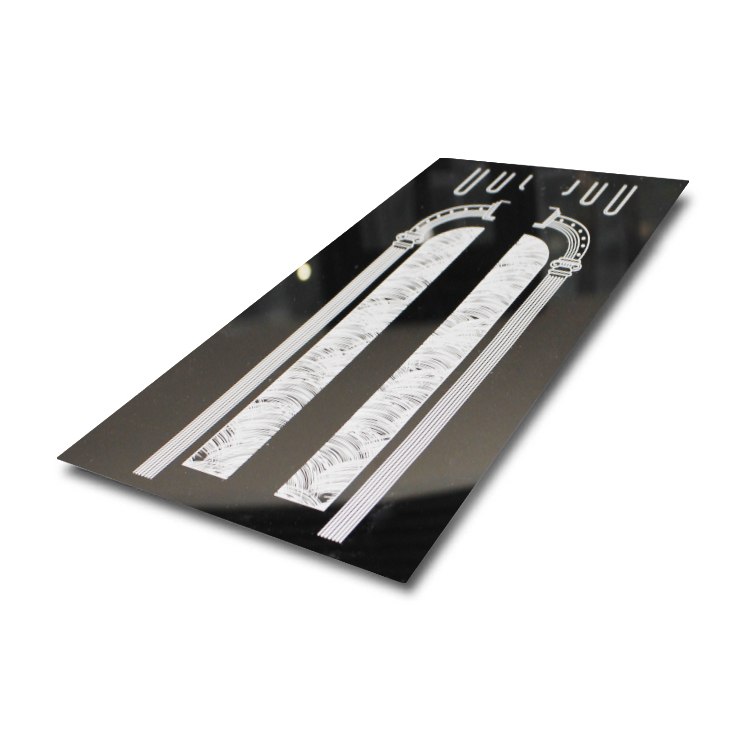
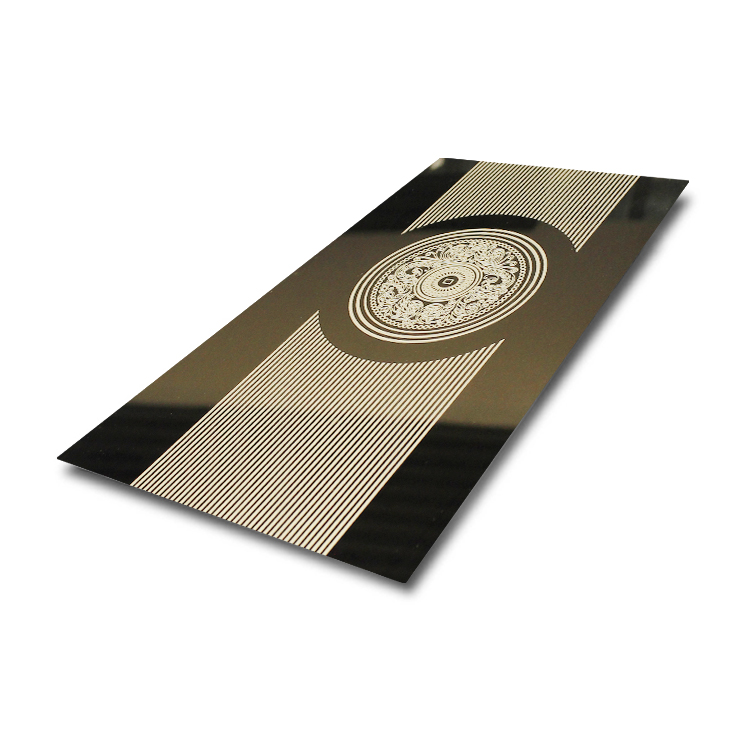
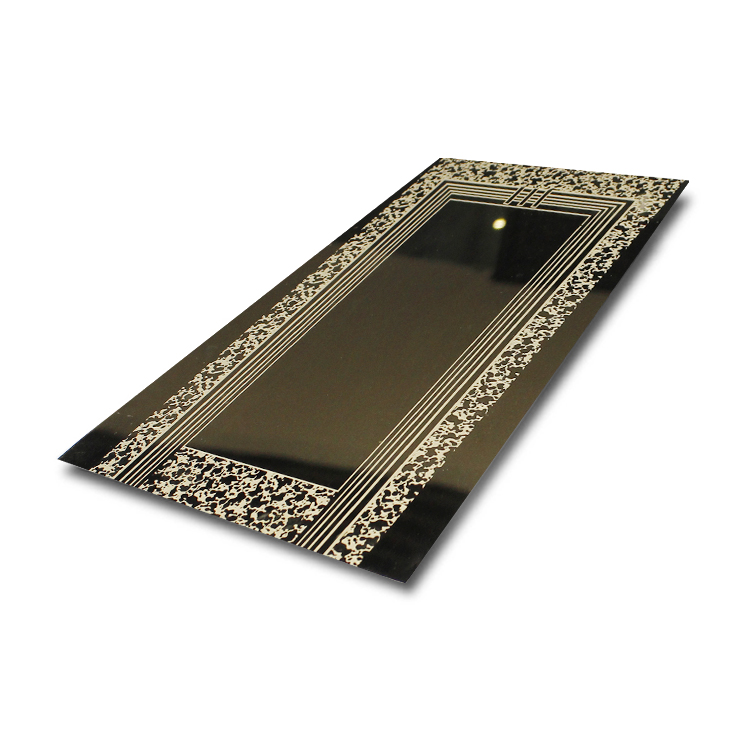
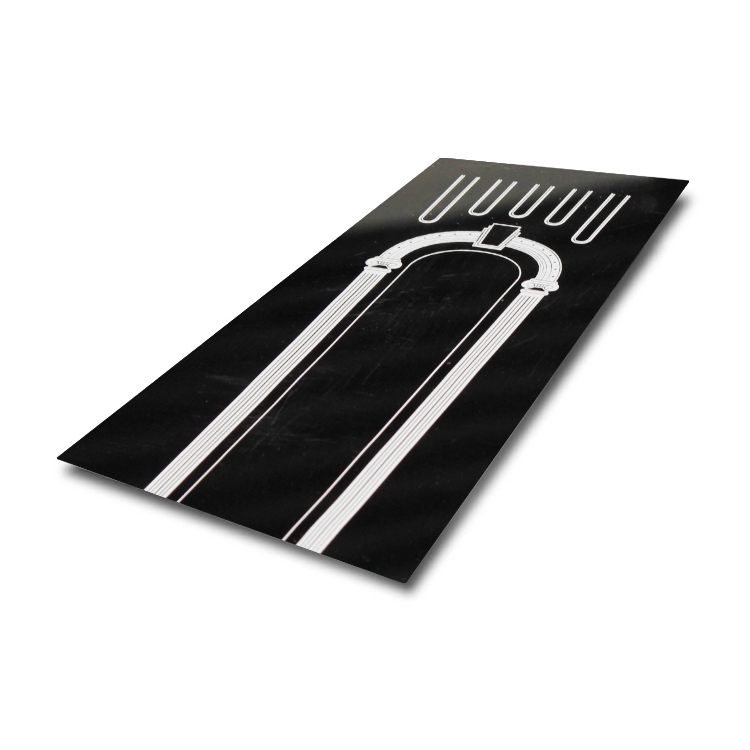
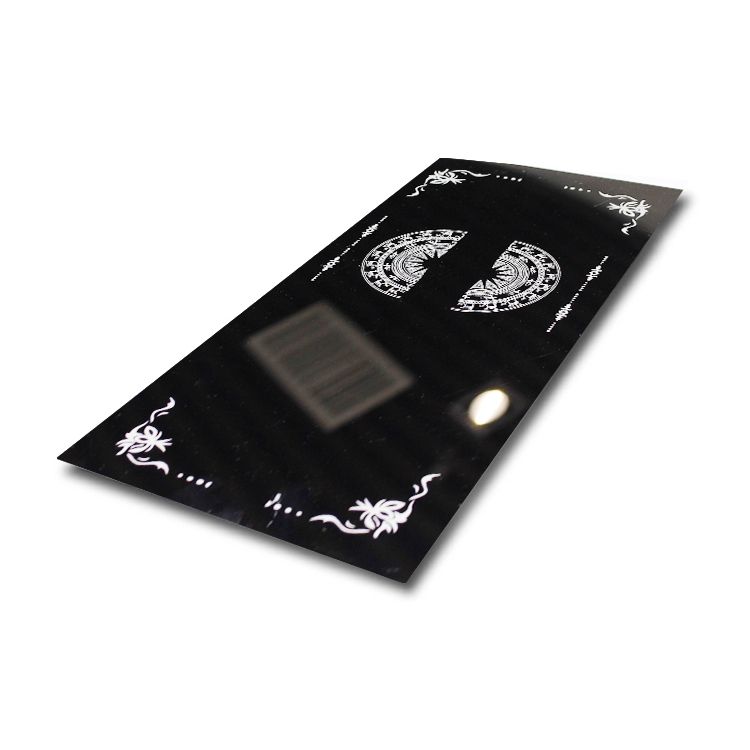
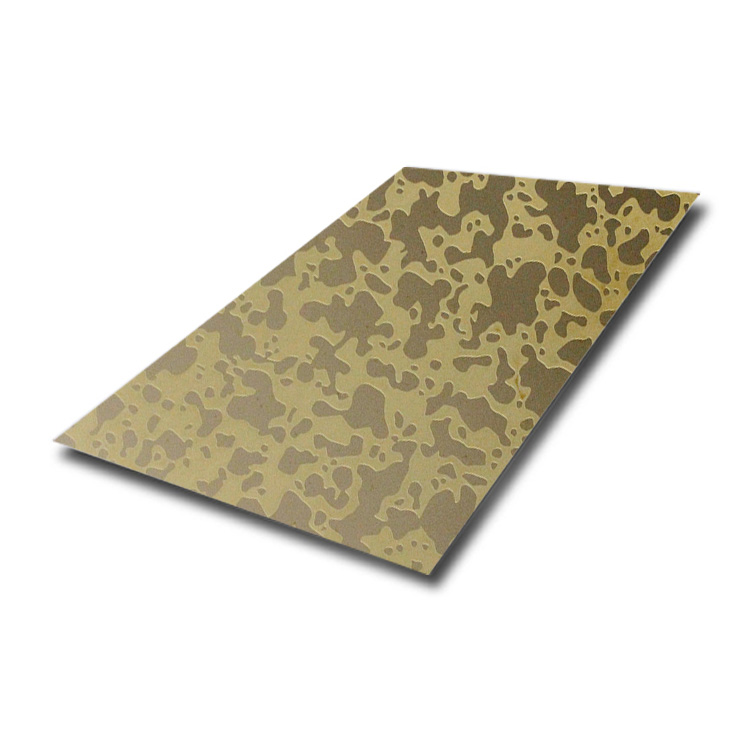
Have you ever noticed a common trend in real life—whether in shopping malls or residential complexes—where stainless steel elevator interiors almost always feature etched finish patterns? Why is that? Today, the team at Grand Metal is here to explore this with you.
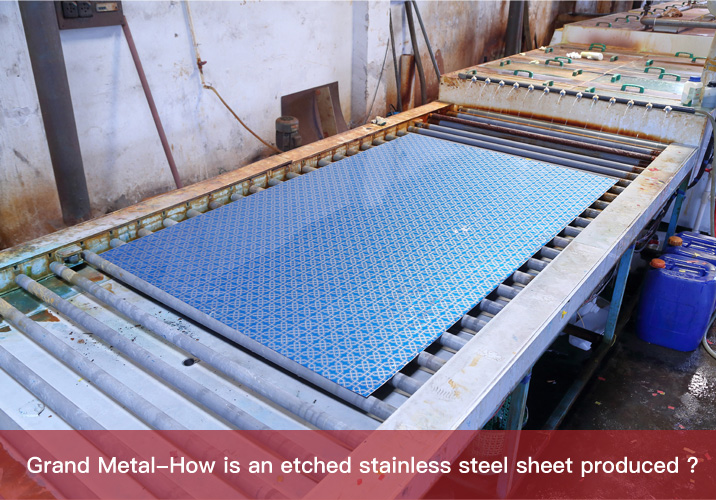
Etching stainless steel is a manufacturing process that selectively dissolves surface material—using chemical or electrochemical methods—to create predetermined patterns, textures, or precision structures. The core principle involves protecting areas not intended for processing with a corrosion-resistant material, allowing an etchant to react with the exposed stainless steel surface, and finally removing the protective layer.
There are currently two main types of etching processes used for stainless steel sheets:
This process involves coating the stainless steel surface with a photosensitive resist, exposing it through a photographic film (mask) to define a fine pattern, developing the image, and then etching. Photo-etching offers high precision (with tolerances of ≤0.5 mm) and is suitable for intricate patterns and high-end decorative applications.

This method uses screen printing to apply an acid-resistant ink onto the stainless steel sheet, creating a protective layer before the etching process takes place.Suitable for large-area patterns and offering lower costs, this process provides relatively lower precision (tolerances of approximately 1–2 mm) and is currently considered a standard, conventional manufacturing technique.


Etched stainless steel is a material that combines functionality with aesthetics; its use in elevator decoration highlights several key characteristics:
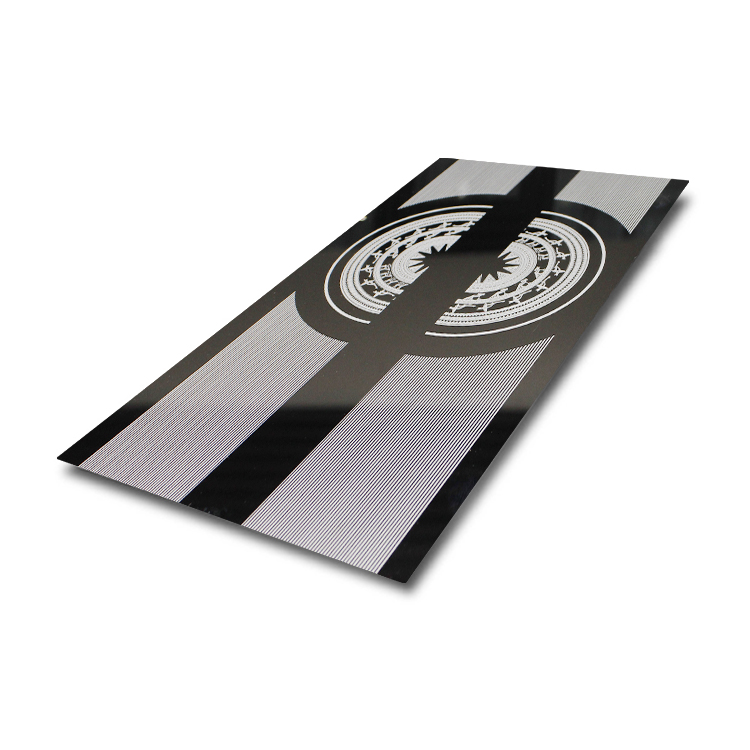
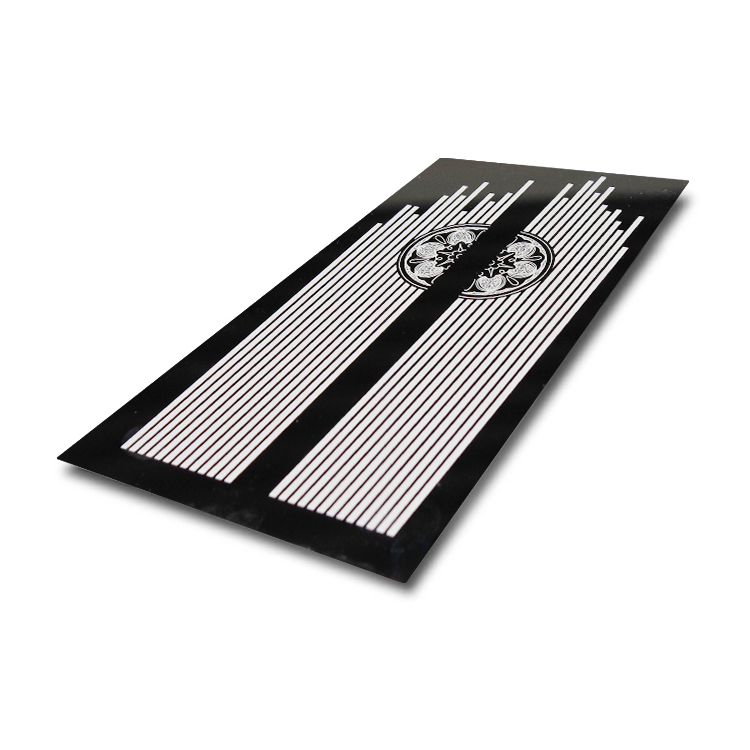
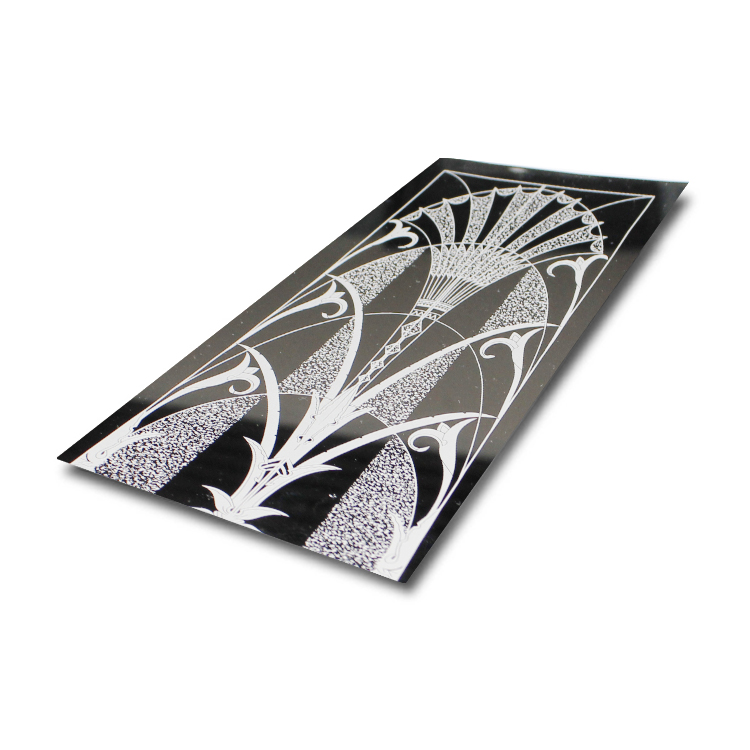
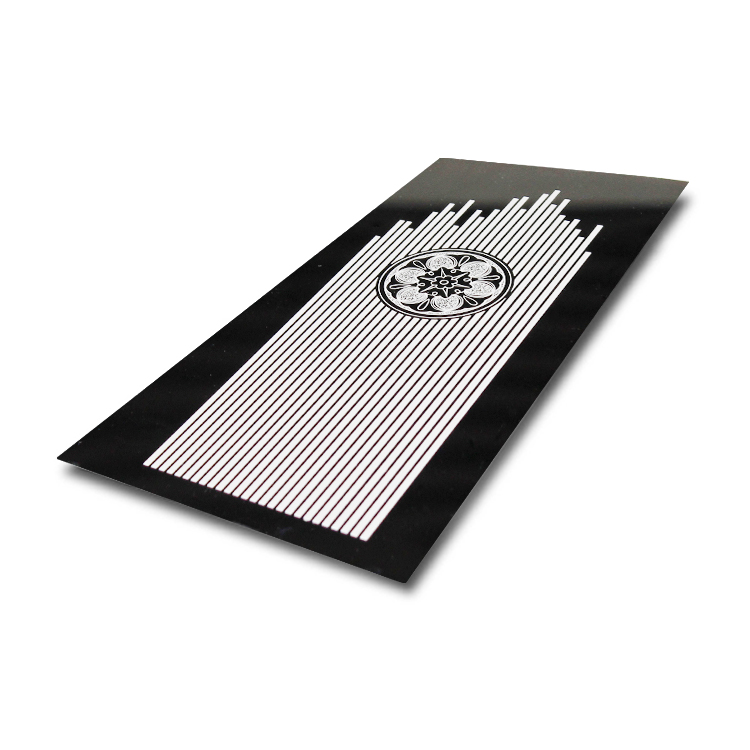
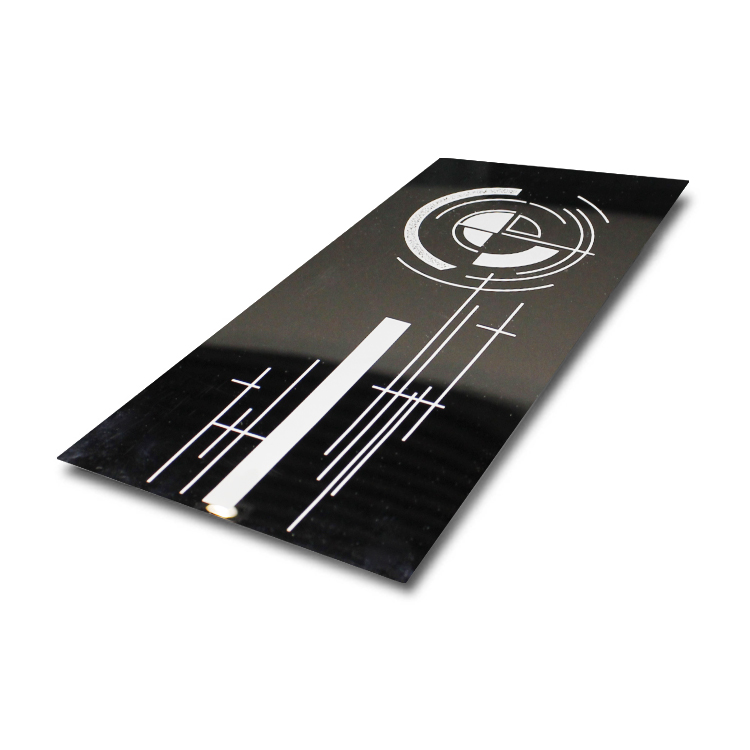
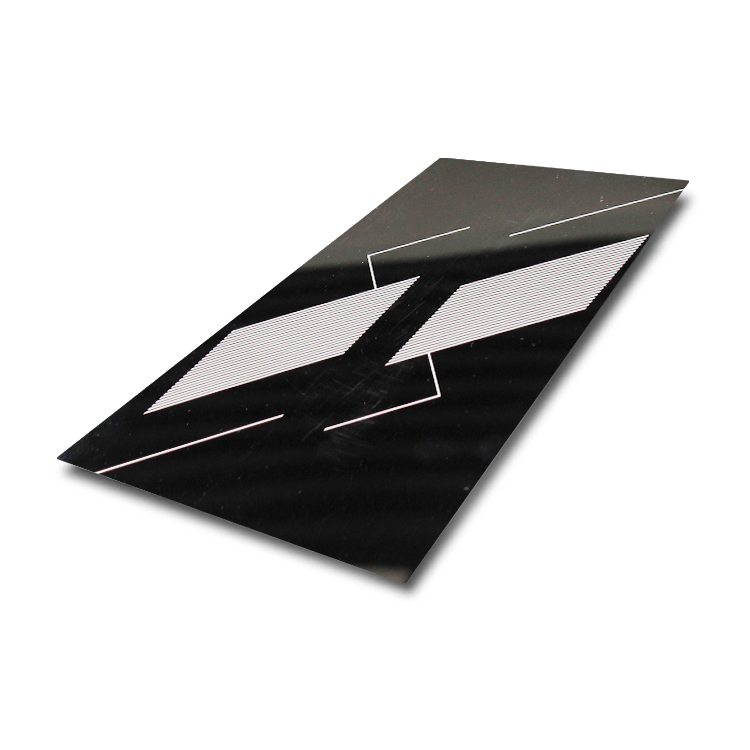
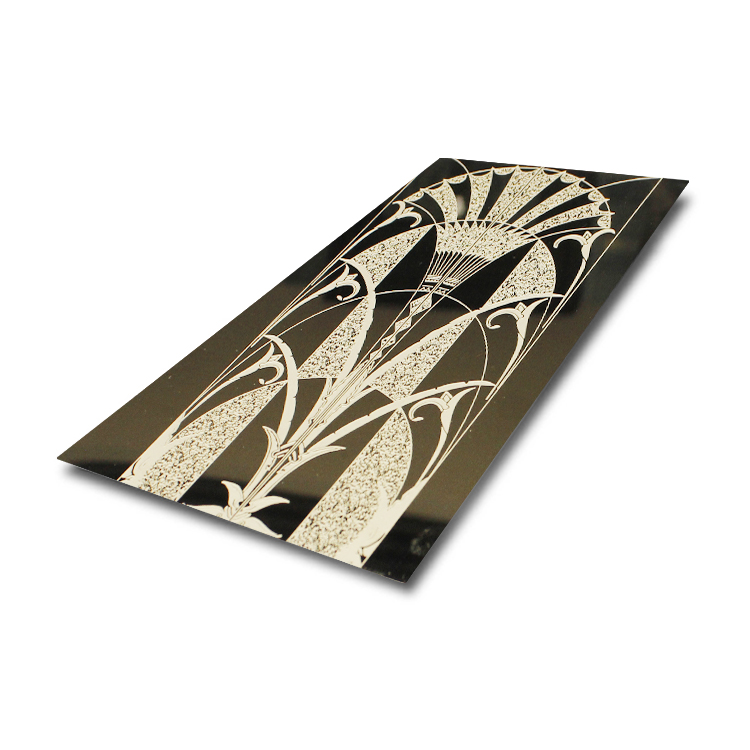
The etching process uses chemical methods to create patterns on the stainless steel surface. When combined with finishes such as mirror, hairline, or titanium-gold plating, it achieves a three-dimensional effect with rich colors and contrasting light and dark tones. Furthermore, the process allows for the customization of logos, text, and other personalized designs, transforming the elevator space from monotonous to vibrant.
Stainless steel possesses excellent resistance to corrosion, wear, and pitting, ensuring the design remains intact over the long term. The surface patterns are created through the material processing itself rather than being applied as a coating; consequently, the colors do not fade, and the material emits no harmful substances, making it safe and eco-friendly.
The smooth surface of stainless steel resists dirt accumulation, making daily cleaning simple. This is a practical advantage for elevators in high-traffic public areas where maintaining a clean appearance is essential.
Etched stainless steel sheets can undergo standard fabrication processes—such as shearing, bending, and welding—without the risk of coating peeling or blistering. This versatility allows the material to easily accommodate the complex shapes and design requirements of elevator cabins.
In summary, etched stainless steel finishes are widely used in elevator decoration because they strike an ideal balance among key requirements: aesthetics, durability, safety, and cost-effectiveness.

Etched stainless steel sheets are primarily used in three areas of elevator decoration: elevator doors, cabin walls, and ceilings. Thanks to their corrosion resistance, fingerprint resistance, and customizable patterns, they are frequently employed to elevate the texture and design aesthetic of the space.
Etched panels are mainly used for the exterior decoration of elevator doors in hotels or high-end office buildings, where etched patterns serve to enhance the overall sense of luxury and quality.

This is the most common application area. Etched stainless steel panels—often featuring a mirror or hairline finish as the base—are processed to reveal patterns or brand logos, creating a three-dimensional effect through the interplay of light and shadow.

By leveraging the metallic luster and patterns of etched stainless steel, these stainless steel sheets add depth and detail to the overhead space; they are often treated with an anti-fingerprint finish.

Etching stainless steel—primarily utilizing photo-etching and screen-printing etching techniques—transfers intricate patterns onto the metal surface. By combining these designs with the material's inherent durability, ease of maintenance, and excellent workability, the process creates exceptional visual appeal. Consequently, these etched stainless steel sheets have become one of the most popular decorative stainless steel sheets in the elevator industry, widely used for elevator door panels, elevator cabin interior panels, and elevator ceiling decorations.

By continuing to use the site you agree to our privacy policy Terms and Conditions.