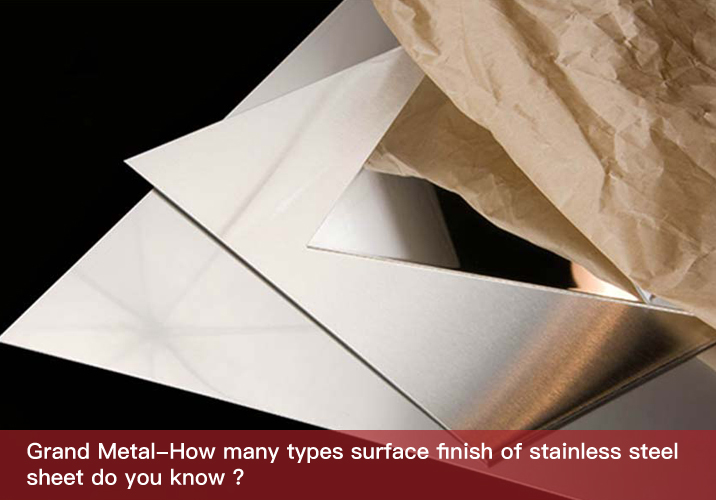
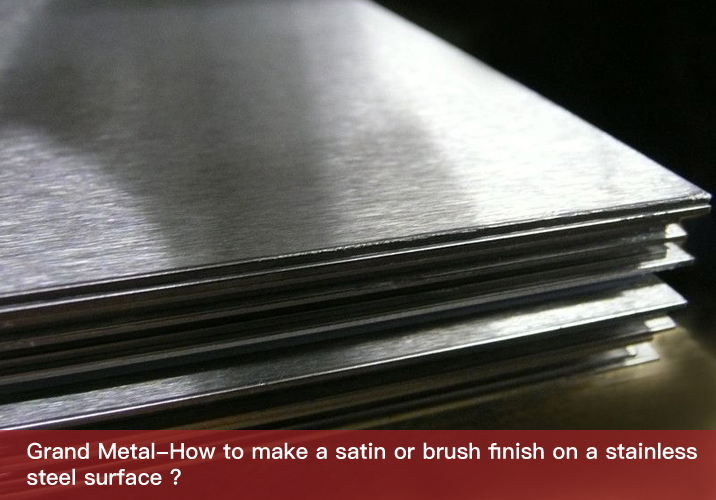
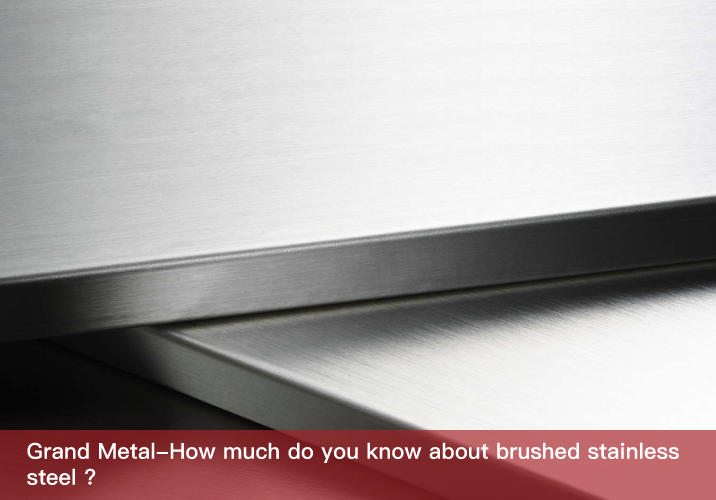
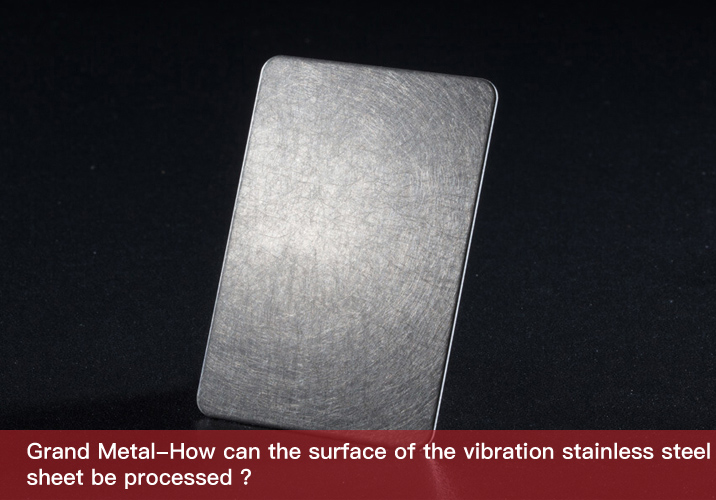
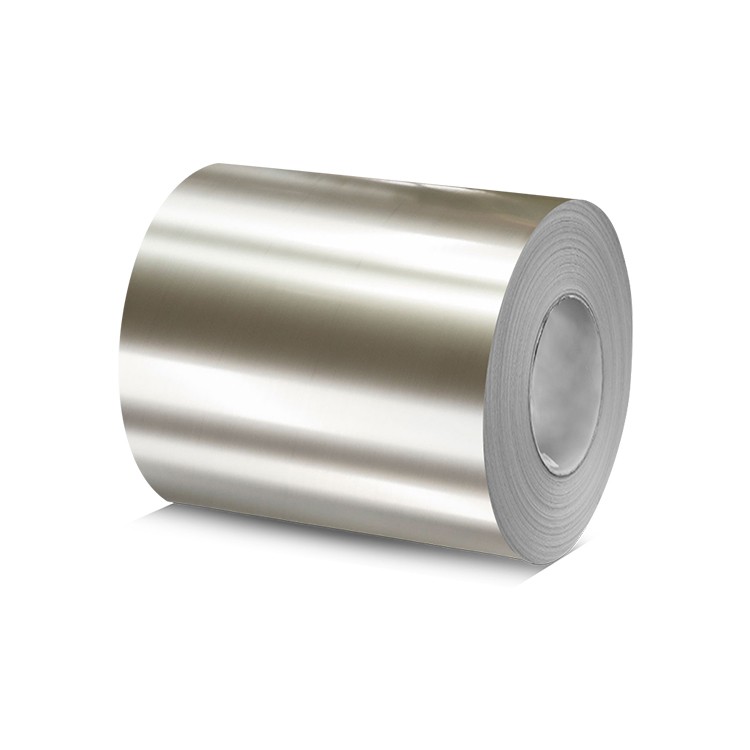
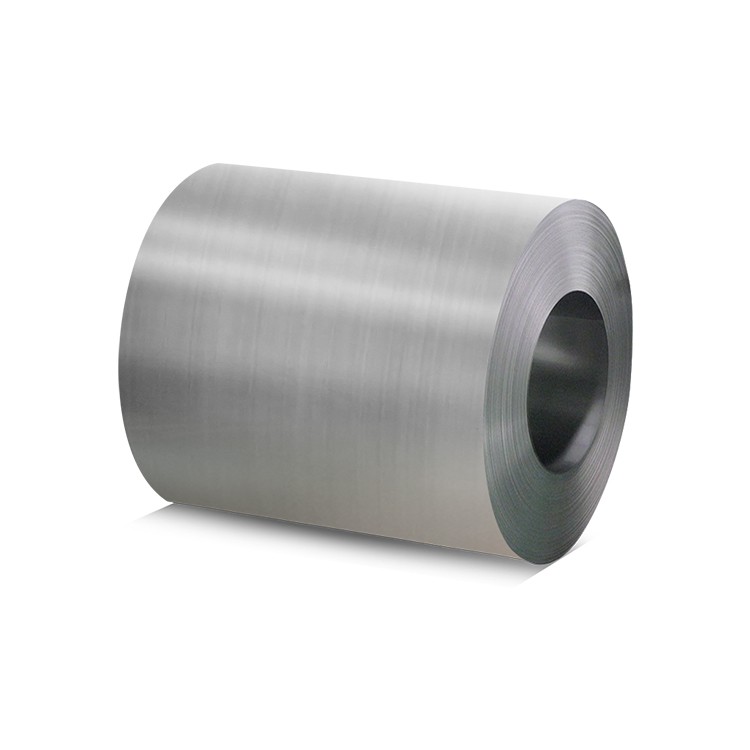
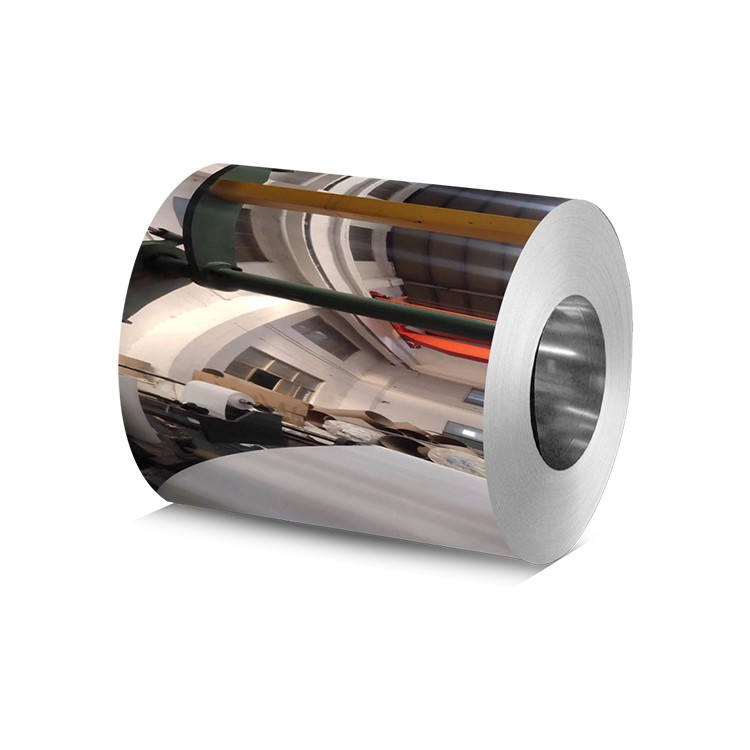
Stainless steel is a ubiquitous presence in our daily lives, yet you may not have noticed a particular detail: why does the same type of stainless steel come in such a wide variety of surface finishes? Here, Grand Metal—a manufacturer with over 15+ years of experience in the production and processing of stainless steel coil and sheets—explores the reasons behind this for you.
Common stainless steel "standard finishes" generally refer to the surface condition as delivered by the mill or surfaces designated by standard codes.

Based on international stainless steel standards (AISI, ASTM, JIS, GB, EN), the common codes for stainless steel surface finishes include the following 10 types:
"No.1" refers to a surface finish obtained after stainless steel undergoes hot rolling, annealing, and pickling (or descaling). Its key characteristics are a rough, matte appearance (dark gray in color); it is considered an industrial-grade, "raw" (or "as-rolled") base surface.

Feathure
The stainless steel plate is heated and rolled (hot-rolled), subsequently annealed to relieve internal stresses, and finally pickled to remove surface scale. As it does not undergo cold rolling or polishing, the surface is not smooth; it has a certain degree of roughness and is non-reflective.
Application
Since the No. 1 finish prioritizes functionality over aesthetics, it is primarily used in industrial applications where surface finish requirements are not stringent, such as storage tanks, piping, and structural components.

The 2B finish is a surface condition obtained by subjecting a No. 1 finish (hot-rolled, annealed, and pickled) to further cold rolling, annealing, and pickling (or bright annealing). It is currently one of the most widely used and common stainless steel surface finishes.

Feathure
The processing of 2B stainless steel begins with cold-rolling hot-rolled stainless steel coils to reduce thickness and flatten the surface, followed by annealing to relieve work hardening; finally, the material undergoes pickling or bright annealing to achieve the characteristic 2B finish. Compared to the No. 1 finish, the 2B finish is smoother and flatter, featuring a matte appearance that offers some reflectivity—though not with the clarity of a mirror—and a significantly lower surface roughness.
Application
2B stainless steel offers a balance of good corrosion resistance, workability, and aesthetic appeal, with applications spanning kitchenware and home appliances, food and medical equipment, and architecture and decoration.

The 2D stainless steel surface finish is obtained by subjecting No. 1 finish material (hot-rolled, annealed, and pickled) to further cold rolling, annealing, and pickling processes. The key distinction between 2D and 2B finishes lies in the final processing step: 2D finish material does not undergo skin-pass rolling with polished rolls (or undergoes only light rolling with matte-finish rolls) after the cold rolling, annealing, and pickling stages, whereas 2B finish material undergoes a final light rolling pass with polished rolls.

Feathure
The production process for 2D stainless steel involves hot rolling, annealing and pickling, cold rolling, annealing, and pickling (or descaling). While cold rolling results in a flatter surface than the No. 1 finish, the final post-pickling state retains a matte, non-reflective texture. The surface is uniformly matte, appearing rougher and less glossy than the 2B finish.
Application
The matte characteristics and specific surface roughness of the 2D finish make it advantageous for applications requiring deep-draw forming or where reflectivity is not a concern; it is commonly used for components such as automotive parts and water pipes.

The No.4 stainless steel finish is a unidirectional textured surface achieved through abrasive polishing; it is the most commonly used and versatile polished finish in light manufacturing.

Feathure
The No.4 finish is typically produced by taking a 2B or 2D surface as the substrate and subjecting it to unidirectional polishing using 150–180 grit abrasive belts. The resulting surface displays visible "grain" or "hairlines" with a distinct directional texture, offering low gloss and moderate reflectivity.
Application
Thanks to its uniform directional texture, localized scratches or areas where welds have been ground down can be repaired by blending them along the original grain, allowing the area to visually reintegrate with the surrounding surface. Consequently, it is widely used in:
1. Food and catering equipment: Worktops, kitchen equipment, restaurant fixtures, etc.
2. Architecture and decoration: Elevator doors, handrails, curtain wall panels, storefronts, etc.
3. Medical and industrial sectors: Medical devices, chemical processing equipment.

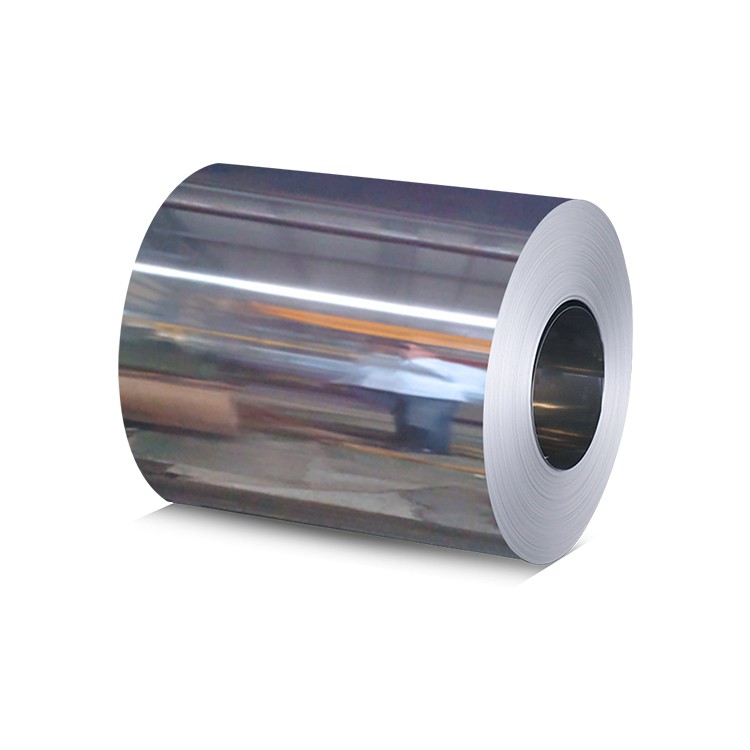
The BA finish stands for "Bright Annealed." It is a smooth, lustrous surface obtained directly by annealing cold-rolled material in a furnace with a protective atmosphere.

Feathure
The production process involves annealing in a protective atmosphere—typically pure hydrogen or a hydrogen-nitrogen mixture—which effectively prevents oxidation. This eliminates the need for pickling, thereby preserving the brightness achieved during cold rolling. The resulting surface is smooth, shiny, and highly reflective, sometimes referred to as a "mirror-like" finish. While its brightness exceeds that of the 2B finish, it generally does not achieve the perfectly clear image reflection of an 8K mirror finish; however, the surface is much smoother and finer than the 2B finish.
Application
Due to its bright appearance and smooth texture, BA stainless steel is frequently used in applications where aesthetics are important:
1. Home appliances: Washing machine drums, dishwasher liners, etc.
2. Decoration and architecture: Interior decorative panels, appliance panels, etc.
3. Other: Food processing equipment, medical devices, kitchenware, etc.

The No.3 finish is a type of coarse-ground surface treatment; it is rougher than the No.4 finish and represents an initial stage of the polishing process.

Feathure
The No.3 finish is typically produced by using a coarse abrasive belt (approximately 80–120 grit) to grind a 2B or 2D base surface in a single direction. The resulting surface displays short, relatively coarse, parallel polishing lines and offers moderate reflectivity, though the grain texture is much more pronounced than that of the No.4 finish.
Application
Due to its rougher surface and distinct texture, No. 3 stainless steel is generally used in applications where high aesthetic standards are not required or where further processing (such as polishing to a No. 4 finish) is intended. Specific applications include:
1. Industrial and food-processing equipment: Brewing equipment, food processing machinery, kitchen equipment, scientific instruments, etc.
2. Architecture and decoration: Certain interior and exterior architectural decorative materials.

The "SB" finish stands for Scotch-Brite finish; it is also sometimes referred to as the "European standard texture" or "snowflake sand" finish. It is a matte, brushed finish characterized by a uniform, fine texture.

Feathure
SB finish stainless steel is typically produced using a 2B or BA finish as the base material. It is abraded and polished using 150–180 grit Scotch-Brite (a nylon abrasive material) to create a surface that is smooth, finely textured, and soft to the touch. It offers a semi-matte appearance with low reflectivity and a unidirectional grain (though less pronounced than that of the No.4 finish). Compared to the "hairline" texture of the No.4 finish, the SB finish is more uniform and refined, offering a soft, "frosted" feel.
Application
SB finish stainless steel is widely used in Europe and the United States; due to its pleasant texture and compliance with local hygiene standards, its primary applications include:
1. Kitchen and bathroom appliances: High-end kitchen equipment, dishwashers, refrigerator panels, etc.
2. Architectural decoration: Elevator panels, interior decorative panels, interior wall cladding, etc.
3. Other: Certain bathroom products (such as sinks).

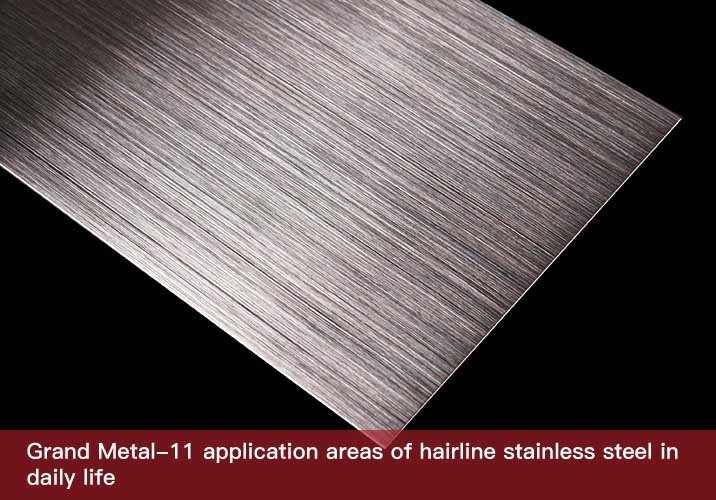
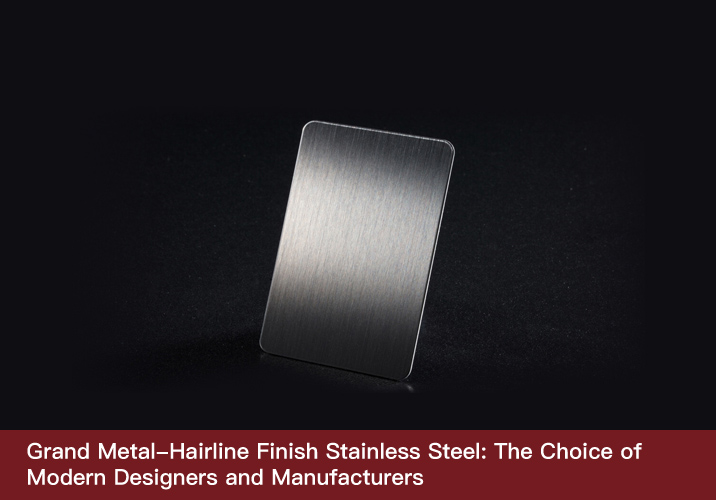
The HL finish—short for "Hair Line"—is commonly referred to as a "brushed finish." Like the No.4 finish, it features a directional texture, but its appearance is finer and more continuous, with a softer luster.

Feathure
HL finishes are typically produced using 2B-finish stainless steel as the base material, which undergoes unidirectional grinding with 150–240 grit abrasive belts. This process creates a very fine, continuous linear texture resembling strands of hair—hence the name "Hair Line." Visually, the HL finish offers a matte effect with low reflectivity, creating a sophisticated, high-end metallic look. Regarding the grain, the texture is unidirectional (long-grain), typically appearing longer and more continuous than that of the No.4 finish.
Application
The primary value of the HL finish lies in its aesthetic appeal; it is widely used in visible areas where a premium texture is desired. Specific applications include:
1. Architecture and Elevators: Elevator door panels, escalators, interior and exterior decorative panels, door frames, etc.
2. Home Appliances and Digital Devices: High-end appliance panels, metal casings, etc.

The "8K" finish is what is commonly referred to as a "mirror finish." Through multiple grinding and polishing stages, the stainless steel surface is treated to resemble a mirror, capable of producing clear reflections.

Feathure
8K finish stainless steel is typically produced using 2B or BA grade sheets as the base material. It undergoes a series of processes—including rough grinding, fine grinding, and ultra-fine grinding—using polishing machines and abrasive fluids. The resulting surface is exceptionally smooth and possesses a very high specular reflectance (typically exceeding 90%), creating a mirror-like, brilliant appearance.
Application
8K finish stainless steel sheets are primarily used in applications where high aesthetic appeal is required, such as:
1. Architectural decoration: Elevator door panels, curtain walls, columns, interior décor, etc.
2. Home appliances and industry: High-end appliance panels, industrial equipment casings, automotive components, etc.

Embossed finish refers to a surface treatment created through an embossing process, where a three-dimensional, textured pattern is rolled onto the surface of a stainless steel sheet.

Feathure
The embossed finish falls under the category of "mechanical embossing." The process involves passing a stainless steel coil between a pair of embossing rollers featuring engraved patterns. As the patterns on the upper and lower rollers interlock, the metal is compressed and deformed as it passes through, replicating the raised, three-dimensional pattern onto the surface. The resulting finish features a distinct 3D texture; patterns can range from imitations of fabrics (such as linen), leather, or wood grain to geometric shapes or custom decorative designs.
Application
Embossed finish stainless steel is primarily used in architectural decoration and applications requiring structural strength. Specific applications include:
1. Architecture and Elevators: Elevator door panels, elevator car interior walls, architectural curtain walls, and interior/exterior decorative panels.
2. Home Appliances and Furniture: Refrigerator door panels, cabinet panels, and kitchen equipment panels.
3. Industrial and Public Facilities: Stair treads (anti-slip), walkways, protective covers, etc.

Common stainless steel "standard finishes" generally refer to the surface condition as delivered by the mill or surfaces designated by standard codes.Based on international stainless steel standards (AISI, ASTM, JIS, GB, EN), the common codes for stainless steel surface finishes include :No.1,2D,2B,No.4,BA,No.3,SB,HL,8K,Embossed.

By continuing to use the site you agree to our privacy policy Terms and Conditions.