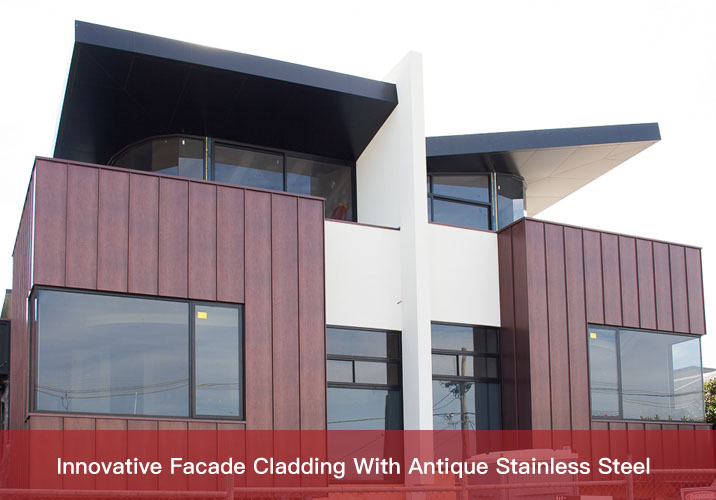
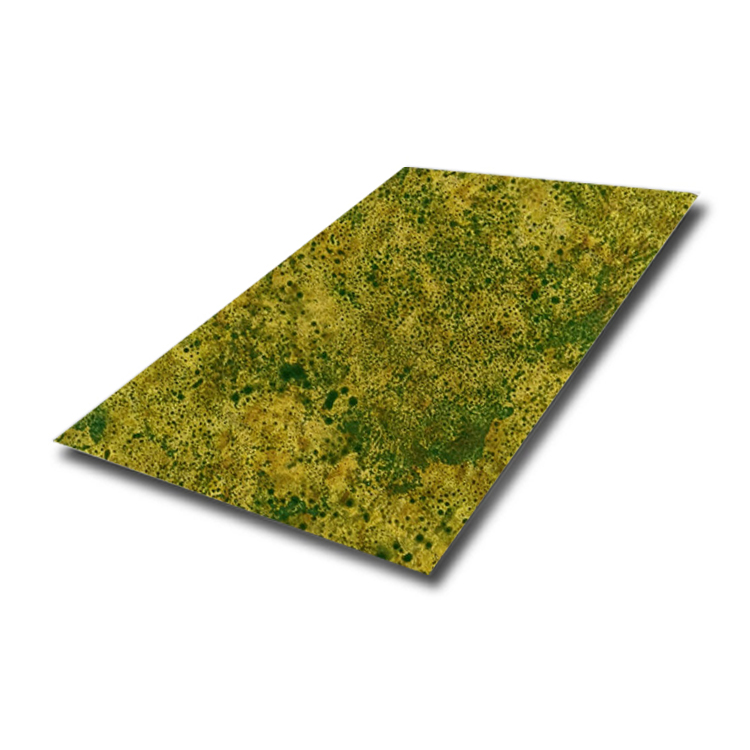
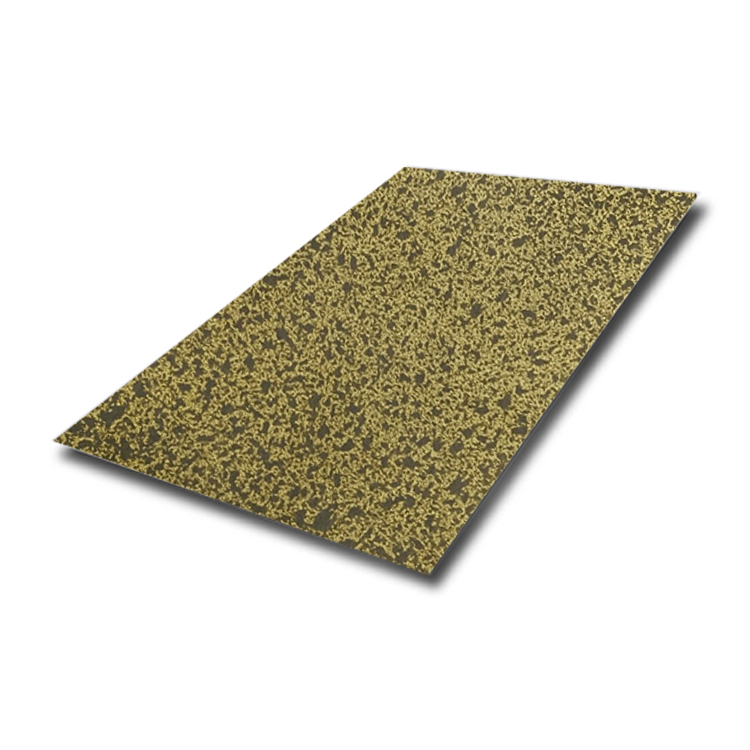
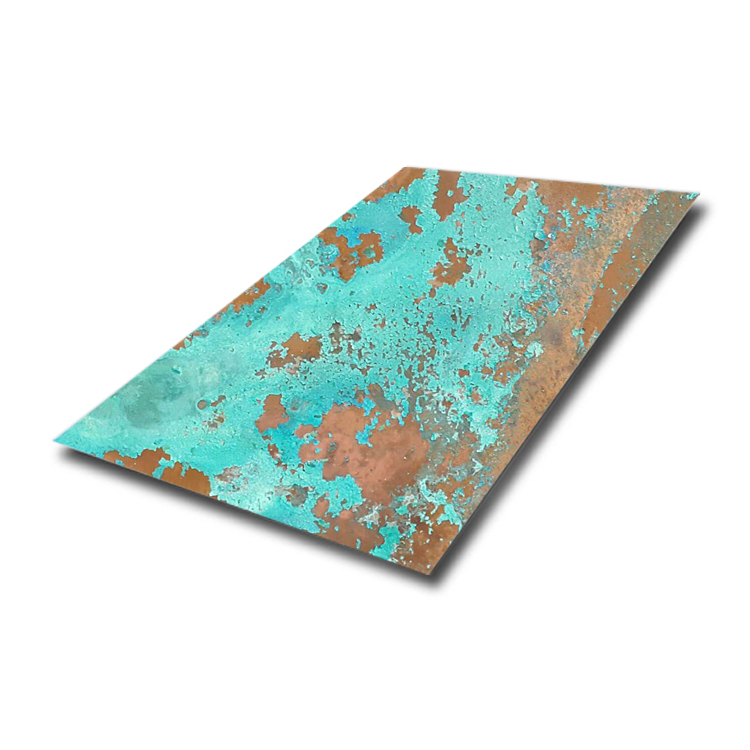
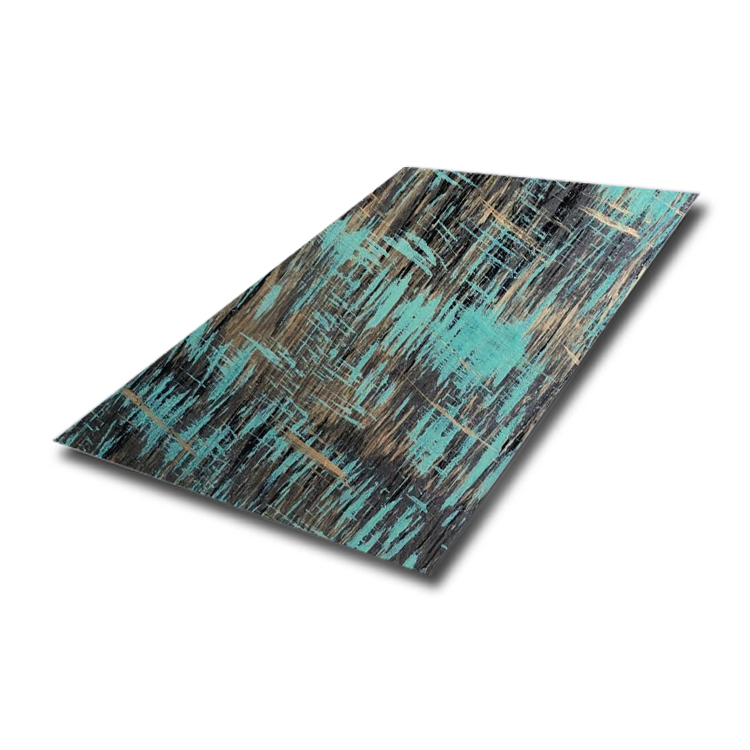
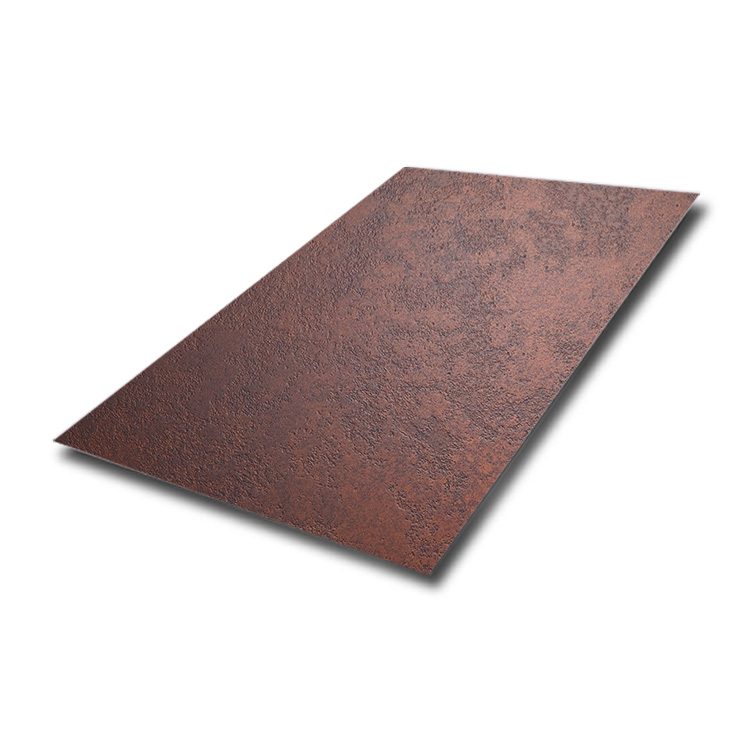
Have you noticed the recent popularity of a type of decorative stainless steel material in the decorative sector (such as furniture, kitchen and bathroom fixtures, architectural decoration, and art installations)? Not only is it corrosion-resistant and rust-resistant, its finish also creates a retro, industrial, or timeless quality. This type of decorative stainless steel is called antique stainless steel. So, how much do you know about the craftsmanship of this antique stainless steel?

As a manufacturer of antique stainless steel sheets with over 18 years of experience in production and sales, Grand Metal will reveal to you today how to make a stainless steel sheet look aged:
Antique stainless steel, also known as retro stainless steel,aged stainless steel or distressed stainless steel etc, uses a stainless steel sheet as the base sheet that has its surface color or texture altered through chemical distressing (localized corrosion). This creates an uneven oxide layer or coloring effect, ultimately giving the stainless steel sheet a sense of age. I call this process "stainless steel distressing."


Distressed stainless steel processes are generally categorized into mechanical distressing and chemical distressing, with the latter being the most common treatment. However, most fabricators will also combine the two methods. The details are as follows:
Mechanical distressing involves mechanically altering the surface of stainless steel, removing some of its gloss and creating scratches, textures, or a matte effect. The main methods are:
Brushing: The most common method. Using sanding belts, nylon wheels, or scouring pads of varying grit, rub the flat stainless steel surface in a single or cross-direction manner to create fine or coarse, linear, streaky, or snowflake-like textures. Brushing inherently creates a matte finish and is the foundation of the "aged" effect.
Sandblasting: Using a high-speed airflow to propel sand particles (such as quartz sand, glass beads, or corundum) against the stainless steel surface, creating a uniform, matte, textured surface. The coarseness of the sand particles and the air pressure determine the surface roughness. Sandblasting effectively removes mechanical scratches and fingerprints and is a highly effective method for achieving a uniform matte or frosted finish.
Grinding/Polishing: This does not refer to a mirror finish. Instead, it involves applying a coarse grinding wheel, sandpaper, or wire wheel to a surface or surface, creating effects such as wear, scratches, and edge rounding. This process is often combined with other techniques.
Hammering/Peen: Using a specialized hammer or tool to strike the stainless steel surface creates a rugged, hammered texture, simulating the marks of hand-forging. The effect is relatively rough.
Engraving/Etching: Mechanical engraving or chemical etching is used to create patterns, text, or deeper textures on the surface, adding a vintage feel and a sense of depth.

Chemical solutions (primarily acid) react with the stainless steel surface, changing its color or causing localized corrosion, resulting in an uneven oxide layer or coloring. This is called chemical distressing, and its main methods are as follows:
Acid washing: Stainless steel is immersed in a strong acid solution (such as a mixture of nitric acid and hydrofluoric acid) to remove the chromium oxide passivation layer, exposing the metal base and creating a uniform, matte gray or light white surface. This is a key step in achieving an industrial, basic aged effect. The acid-washed surface is more receptive to subsequent coloring or further treatment.
Chemical coloring: Using a specific chemical solution (such as one containing selenate or copper sulfate), by immersion or brushing, and controlling the reaction time and temperature, a thin film of a compound in a brownish-yellow, bronze, or even turquoise color is formed on the stainless steel surface. The depth and distribution of the color can be manipulated through wiping and polishing to simulate a patina effect. This is the core method for achieving a "vintage" color.
Blackening/darkening: Using a strong oxidizing solution (such as a dichromate solution) to create a black or dark blue oxide film on the surface.
Localized corrosion: Using acid or etching cream to corrode specific areas, creating rust spots, flow marks, or irregular textures.

The following illustrates the typical process for applying antique stainless steel sheets to create an antique bronze hairline effect:
Select the appropriate stainless steel sheet (commonly used are 304 and 316).
1. Degreasing/Deoiling: Use an alkaline or solvent-based cleaner to thoroughly remove oil, fingerprints, dust, and other contaminants from the surface of the stainless steel sheet. This is a crucial step, as it directly impacts subsequent treatment and adhesion. Methods include soaking, spraying, and wiping.
2. Water Rinse: Thoroughly rinse with clean water to remove any residual cleaning agent.
3. Pickling: Immerse in an acidic solution (such as nitric acid and hydrofluoric acid) to remove the extremely thin chromium oxide layer (passivation film) and minor impurities, revealing a fresh, activated stainless steel surface. This results in a uniform, matte off-white base.
4. Passivation: After pickling, the plate is typically passivated with a solution such as nitric acid or citric acid to regenerate a thin, dense protective layer of chromium oxide, enhancing corrosion resistance. This step is sometimes omitted or adjusted during the aging process to facilitate subsequent coloring.
5. Rinse and Dry: Thoroughly rinse again and dry completely.
Use a frosting machine to apply a hairline finish according to the design (straight, random, snowflake, etc.) to achieve the desired texture and matte finish.
1. Solution Preparation: Prepare a specific chemical coloring solution (usually a proprietary formula or a solution of selenate, copper sulfate, sulfuric acid, etc., in a specific ratio).
2. Coloring the Stainless Steel Sheet. Coloring methods include the following:
1) Immersion Method: Completely immerse the stainless steel sheet in the coloring solution, controlling the time and temperature, and observe the color development (typically from light brown to dark brown, bronze, or even turquoise).
2) Brushing: Use a brush to apply the coloring liquid to the stainless steel surface. This method can be used for spot coloring or uneven effects. This method requires skill.
3. Color Control: By repeatedly dipping/brushing, wiping, and wiping, and by controlling the reaction time, temperature, and solution concentration, the final color and color distribution can be precisely controlled. The goal is to achieve a hue similar to copper oxide or bronze, with varying shades.
1. Wiping/Polishing: Before the coloring film is completely dry and cured (or afterward), use a soft cloth, scouring pad, steel wool, or other materials to wipe and polish the surface to remove some of the color from the high spots, revealing the underlying stainless steel's luster and simulating signs of wear and tear.
2. Localized Chemical Etching:
1) Color Darkening: Apply more coloring liquid or a more concentrated solution to recessed areas and corners to deepen the color and create a sense of depth.
2) Corrosion Spotting: Apply acid or etching cream to create rust spots or flow marks.
3) Imitation Patina: To achieve a more realistic antique bronze effect, a patina paste or a special solution is sometimes applied to specific areas (such as grooves and seams) to create bluish-green basic copper carbonate spots.
1. Cleaning: Thoroughly rinse with plenty of water to remove any residual chemicals on the stainless steel surface.
2. Neutralization: Neutralize any remaining acidic substances with a weak alkaline solution.
3. Drying: Completely dry the stainless steel sheet.
4. Sealing/Protection: Spray or wipe on a layer of clear varnish (such as polyurethane varnish, acrylic varnish, fluorocarbon varnish) or a special metal protective wax.
5. No Protective Coating: Targeting the most pristine, time-modified effect possible, but inform customers that the color may change with use and environment, and that it is more susceptible to stains and fingerprints.
Inspect the antique bronze hairline stainless steel sheet to ensure that its color, texture, and aging effect meet the requirements. Once qualified, it will be packaged.
A noteworthy aspect of the entire process is that a base stainless steel sheet is first dyed to the desired base coating. If the desired finish is bronze, the coating will also be bronze. Following this coating process, a unique in-house production process is used to achieve the various design variations required for the antique finish, such as chemical coloring. Each color can be bronze, antique bronze, or antique copper. Every piece of stainless steel sheet is unique; no two pieces look alike.

The antique stainless steel process is an artistic fusion of physical and chemical degreasing. The core process includes: thorough surface cleaning > obtaining a matte/textured base (brushed/sandblasted/hammered etc) > chemical coloring (antique copper imitation, patina, blackened, etc.) > manual aging and strengthening (wiping, localized corrosion treatment) > application of a protective coating. Precise control of each step, especially the coloring and hand-aging, is crucial for achieving a realistic, beautiful, and durable antique effect. However, it's important to note that because the core of the antiqued stainless steel process is chemical corrosion, the pattern will vary from one part of the same stainless steel sheet to another due to varying degrees of corrosion. These variations are unavoidable, and we strive to ensure that the patterns are as similar as possible.

By continuing to use the site you agree to our privacy policy Terms and Conditions.