Stainless steel is closely related to our daily life. Perhaps most people only know and are impressed by 304 stainless steel. However, there is a kind of stainless steel that is not only affordable, widely used, but also magnetic. It is 430 stainless steel. Here is its complete introduction guide:
430 stainless steel is a type of ferritic stainless steel.Grade 430 has ferrites or iron in its structure and possesses low Cr amount as compared to grade 304. Ferritic stainless steels are known for their magnetic properties and their relatively lower corrosion resistance compared to austenitic stainless steels like 304 and 316.Grade 430 is one of the most commonly used ferritic stainless steel grades.

As the most widely used ferritic stainless steel in the world, 430 stainless steel has the following characteristics:
The 430 grade contains iron in the form of ferrite, and its composition contains chromium, nickel, silicon, manganese, phosphorus and sulfur. Therefore, it is a chromium alloy material. When the alloy contains components such as Cr, Mo and Si, the possibility of its magnetic properties increases.
2. Bright surface
The smelting of 430 stainless steel is formed by bright annealing, and it has a shiny surface due to its high chromium content.
3. High thermal conductivity
The 430 grade has a higher thermal conductivity than 304 because it is often used in applications such as furnace burners or heat exchangers.

| Grade | Ni | Cr | Cu | Mn | Si | C | N | P | S | Mo | Ai | Nb | Ti |
| 430 | <0.60 | 16.00-18.00 | / | <1.00 | <0.75 | <0.12 | / | <0.040 | <0.030 | / | / | / | / |
| Grade | Y.S. | T.S. | ELOG. | HRB |
| 430 | ≥205 | ≥450 | ≥22 | ≥85 |

430 and 304 are stainless steel grades with different requirements. The differences between them depend on their composition, microstructure, properties, etc. Specific details are as follows:
The 430 grade contains iron in the form of ferrite, and its chemical composition contains chromium, nickel, silicon, manganese, phosphorus and sulfur. Therefore, it is a chromium alloy material. In contrast, the 304 grade contains many alloying metals, but the chromium content of both grades is the same. The 304 grade steel contains 8% nickel, which can improve its properties in many different ways, which is the main reason for its superiority.
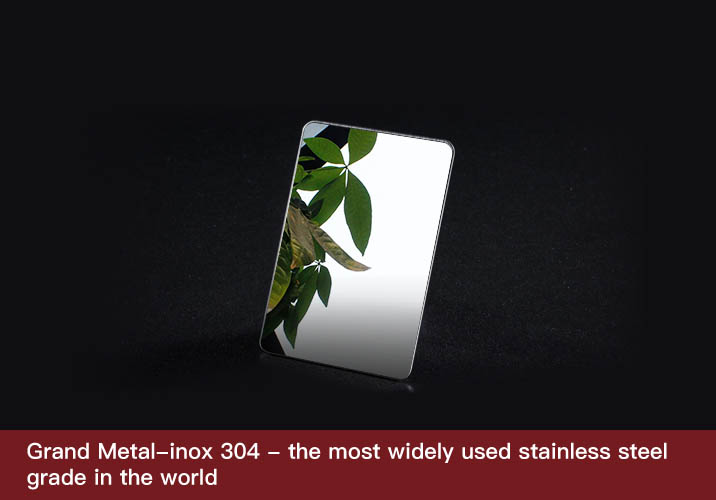
430 and 304 can be distinguished by the appearance of the vise, which is caused by the different chromium ratio. 430 has a shiny surface due to the high chromium content. On the other hand, the 304 alloy has a matte effect due to the less chromium content.
430 is a chromium alloy, which is why it is a highly corrosion-resistant material. But 304 contains nickel and chromium. When these metals react, they produce a good material with excellent properties.
Due to the austenitic structure, the 304 grade has higher strength and durability. Ferritic stainless steels contain iron. They are ductile and malleable compared to austenitic stainless steels. Therefore, ferritic stainless steels have a lower hardness. The austenitic structure has a high carbon content, which helps to increase the strength, durability, yield strength and hardness of the material. The 304 grade has a longer service life than the 430 grade.
In 430 grades, stamping and stretching are far less difficult. However, this steel is susceptible to galling, a process characterized by wear and material adhesion. The 430 materials stamp quite well. It has bright annealed finish. Conversely the stamping of 304 grade needs very sharp cutting tools and enough lubrication due to the metal's extreme hardness.
The mechanical properties of 430 are lower than 304 in terms of strength and hardness. The specific differences in mechanical properties are shown in the following table:
| Mechanical Properties | 430 | 304 |
| Ultimate tensile strength | 345MPa | 515MPa |
| Elongation at break | 25% | 40% |
| Hardness | 85 | 92 |
| Yield strength | 200GPa | 200GPa |
Since nickel in stainless steel is an expensive metal and chromium is relatively cheap, the cost of 430 is lower than that of 304.
| Properties | 430 | 304 |
| Crystal structure | Ferritic | Austenitic |
| Corrosion resistance | Good | High |
| Magnetic properties | Magnetic | Non-magnetic |
| Yield Strength | Good | High |
| Machinability | Easy | Difficult |
| Mechanical properties | Good | High |
| Appearance | Shiny | Matte |
| Price | Cheap | Expensive |
1. Advantages
430 has a good resistant to corrosion. It is also hypoallergenic. It can withstand extreme conditions and acids quite well. They are safer for applications in medical and food industries.
2. Disadvantages
The absence of nickel in 430 grade and susceptibility to corrosion under prolonged exposure are two of the material's drawbacks. It's not quite as strong or greater longevity material as 304 grades is.
The following are the applications for stainless steel grade 430:
1) Building Decoration;
2) Heavy oil burner parts;
3) Household appliances;
4) Home appliance parts;
5) Outdoor advertising column;
6) Products with stress corrosion resistance requirements;
7) Electronic product;
8) Tableware.
Does 430 stainless steel rust?
No, 430 is less likely to rust. But 304 possesses a better rust-free nature than the 430 grade because of the presence of chromium in its main constituents. Oxidation from atmospheric pollutants will eventually ruin 430 stainless steels. 430 stainless steels can also corrode when it is present in environment with high acidic amount for an extended period.
Does 430 stainless steel magnetic?
Yes, grade 430 is magnetic. This stainless steel specifications contains magnetism. The possibility that the alloy will exhibit magnetic characteristics is increased when it contains components like Cr, Mo and Si.
Does 430 stainless steel good for outdoors?
Yes, Stainless steel 430 is good for outdoor. It does not corrode in sightly corrosive and atmospheric conditions. As corrosion is more important than strength in this condition, therefore, it is a suitable choice for outdoors.
Which is Better 430 VS 304 Stainless Steel?
Grades 430 and 304, both have a high rust-free nature. 304 grade gives higher corrosion resistance, greater longevity and high yield strength. 430 grade is going to cost you a lot less money than 304 grade would, but when looking at both of those factors, 304 grade is going to come out on top as the better option. 304 grades have greater longevity than 430 grade.
Is 430 stainless steel food grade?
Food-grade stainless steels contain higher levels of chromium and nickel, which means 430 stainless steel is not considered food-grade. While 430 stainless steel is durable and has a high resistance to heat, it is not suitable for use in food processing, storage, or handling applications due to its lower corrosion resistance and potential for contamination.


By continuing to use the site you agree to our privacy policy Terms and Conditions.